How Jito captured 88% of Solana's stake (and why it dropped to 40% in two months)
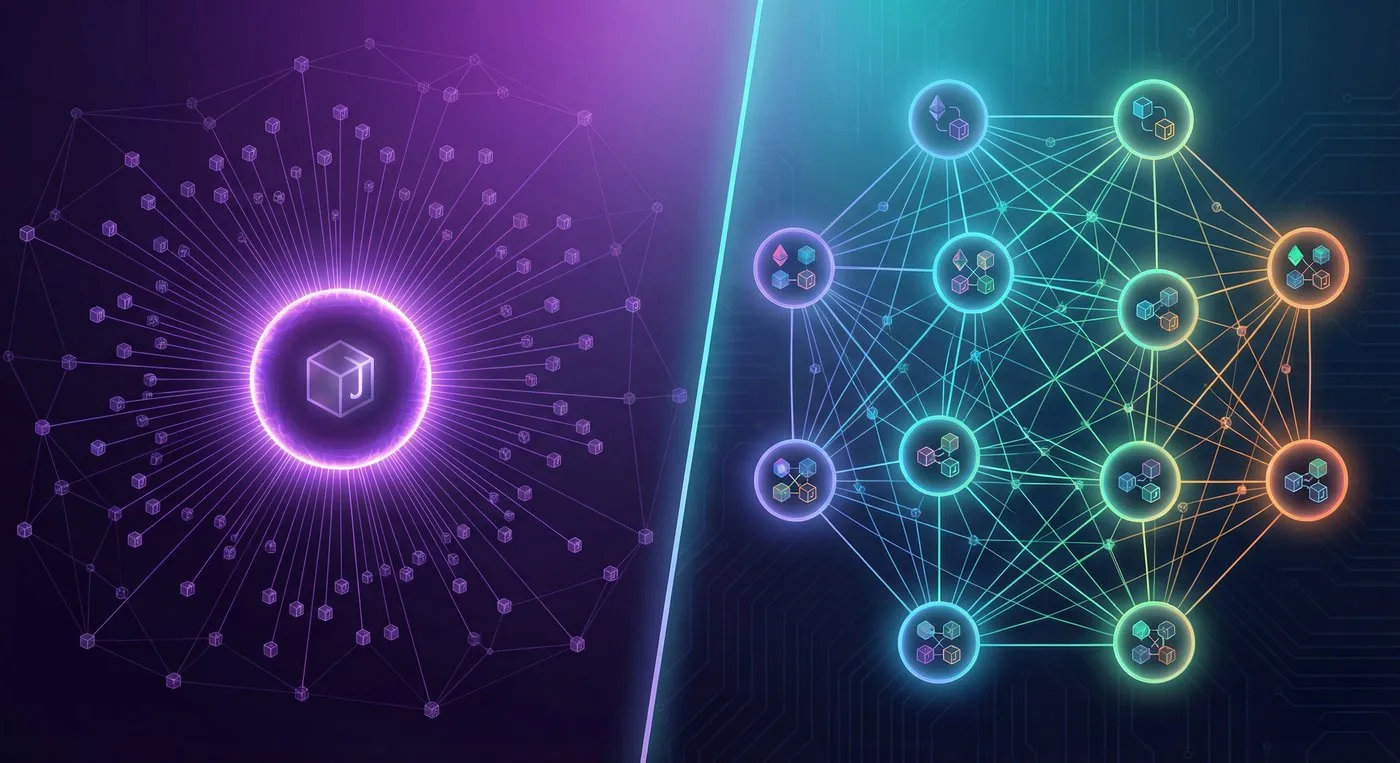
By August 2025, Jito Labs controlled something startling: 88% of Solana’s validator stake was running their client. Not their liquid staking token. Their validator software. One codebase securing nearly nine-tenths of a top-10 blockchain.
Ethereum veterans knew what this meant. They’d spent years fighting Geth’s 80%+ dominance, watching every bug turn into an existential coordination crisis. Solana had built the same problem, but worse, and faster.
Then Firedancer launched in December 2025. Two months later, Jito’s share had dropped to 40-45%. The monoculture collapsed faster than it formed.
This is the story of how innovation created a monopoly, economic incentives made it inevitable, and new technology broke it without anyone needing to coordinate a grassroots campaign.
The MEV machine that ate Solana
Jito Labs launched in 2022 with two products that fed each other in a perfect flywheel.
JitoSOL is a liquid staking token. You deposit SOL, get JitoSOL back (which auto-compounds), and your stake gets delegated across 200+ validators while you stay liquid for DeFi. Standard LST mechanics.
Jito-Solana is a validator client, a fork of Solana’s Agave software with integrated MEV infrastructure. It includes a Block Engine (off-protocol auction for transaction bundles) and later, BAM (Bundle Auction Marketplace), which uses Trusted Execution Environments to decentralize block building.
The genius was the loop: validators running Jito’s client could capture MEV tips. More validators meant more searchers, which meant higher tips, which meant stakers chose validators with the best returns. Validators without Jito lost delegation. JitoSOL captured this yield premium and grew faster than competing LSTs. More JitoSOL stake went to Jito-running validators. Repeat.
By October 2023, 31% of Solana’s stake ran the Jito client. By August 2025, it was 88%.
Why validators couldn’t say no
The economic pressure was simple and brutal. Running Jito’s client added 1.2-1.8% APY from MEV tips. Validators who didn’t run it watched their delegators leave.
Switching costs were real: technical integration, searcher relationships, revenue risk. But staying off Jito meant guaranteed losses. The rational choice was adoption, and rational validators made it.
This is different from malice or capture. Jito Labs didn’t force anyone. They built better infrastructure and let economics do the rest. The problem wasn’t the product. It was that there was no alternative.
A single bug in the Jito client could have taken down 88% of the network. One bad update and Solana stops finalizing blocks. Ethereum learned this the hard way with Geth; Solana was walking into the same trap.
Firedancer changes everything
Firedancer launched on mainnet December 12-15, 2025, after three years of development by Jump Crypto. It’s an independent Solana client written in C (vs. Rust), targeting 1M+ transactions per second, built by high-frequency trading engineers who know how to make software not break.
It also didn’t lock validators into Jito’s MEV ecosystem. You could run Firedancer and still use BAM separately. No trade-off between performance and revenue.
By October 2025, roughly 21% of stake had moved to Firedancer or Frankendancer (a hybrid). By February 2026, Jito’s share was down to 40-45%. In two months, Solana’s client diversity improved more than Ethereum’s did in two years.
Ethereum needed social campaigns, educational sites (clientdiversity.org), and constant community pressure to push Geth below 50%. Solana just needed better software.
The paradox: JitoSOL vs. Jito client
Here’s the weird part. JitoSOL, the liquid staking token, is decentralized. It delegates across 200+ validators. No single validator has more than 3.2% of Solana’s total stake. It helps smaller validators by routing them stake.
The Jito client, at 88%, was centralized. Same software, same codebase, same upgrade path, same single point of failure.
Jito Labs promoted decentralization through liquid staking while accidentally creating a validator monoculture. Not because they wanted control. Because they built the only MEV infrastructure that worked, and validators had no choice but to use it.
What Jito did next
To their credit, Jito Labs has tried to decentralize after realizing the problem.
JIP-24, passed in August 2025, routes 100% of Block Engine and BAM fees to the DAO treasury. Previously it was a 50/50 split with Jito Labs. Now the DAO controls roughly $30M+ in annual revenue, and Jito Labs gets nothing directly.
BAM, launched July 21, 2025, is a marketplace for block builders using TEEs and customizable plugins. The goal: break Jito’s monopoly on block assembly. Let other teams build competing MEV infrastructure on top of open primitives.
JIP-31, proposed in December 2025, subsidizes validators who adopt BAM through Q3 2026. It’s a time-limited incentive to accelerate the shift away from Jito’s centralized Block Engine.
These are real efforts. Whether they work depends on whether independent builders actually show up, or whether Jito remains the de facto standard everyone builds on top of.
Is 40% still too much?
Probably. Ethereum considers 45% Geth share risky. Solana’s Jito client at 40-45% is in the same range.
A critical bug still affects a huge chunk of the network. Coordination on upgrades is still high-stakes. If regulators pressure Jito Labs to censor transactions, 40% of validators face a compliance decision.
But 40% is a lot better than 88%. And the trend is moving in the right direction. Firedancer is production-ready, Agave (the original client) is still maintained, and the economic pressure to diversify now cuts both ways: validators who stay 100% Jito risk getting blamed if something breaks.
The bigger question is whether MEV infrastructure will diversify too. Client diversity is improving. MEV infrastructure is still mostly Jito’s, even if it’s DAO-governed and TEE-secured. BAM is a step toward permissionless block building, but it’s still early.
What this tells us about decentralization
Solana’s client diversity crisis solved itself faster than Ethereum’s, but it required three years of Firedancer development and a well-capitalized team willing to build an entirely new client from scratch.
Ethereum’s solution was social. Solana’s was technological. Both worked, but one was faster and one was more accessible.
The lesson: economic incentives drive validator behavior more than ideology. Validators optimize for yield and uptime. If the best MEV infrastructure is centralized, they’ll use it. If a better client exists that doesn’t sacrifice revenue, they’ll switch.
Decentralization isn’t just about convincing people to care. It’s about building alternatives that work and paying the costs to maintain them.
Jito’s dominance wasn’t a conspiracy. It was the natural result of being first, being good, and being the only option. Firedancer broke the lock by being better and giving validators a reason to move.
40-45% is still high. But it’s not 88%, and it’s dropping. The question now is whether BAM creates real competition in MEV infrastructure, or whether Jito remains the layer everyone builds on, just with less visible control.
Sources
- Helius: Measuring Solana’s Decentralization: Facts and Figures (August 1, 2025)
- Blockchain Magazine: Why Jito Token (JTO) Jumped 21.5% Today (February 2026)
- Jito Forum: JIP-24 Proposal (August 5, 2025)
- Jito Foundation: Introducing BAM (July 21, 2025)
- Unchained: Jump Crypto’s Firedancer Goes Live on Solana Mainnet (December 15, 2025)
- Backpack Exchange: What Is Firedancer and Why It Matters for Solana (October 2025)
- The Block: Solana Foundation says nearly a third of stake running through Jito Labs client (October 4, 2023)
- CoinDesk: Solana’s Jito Proposes Routing 100% of Block Engine Fees to DAO Treasury (August 5, 2025)
- Solana Compass: Jito Staked SOL stake pool statistics
- Jito Forum: JIP-31 Proposal (December 22, 2025)
Last updated: February 24, 2026