SEC's 'Rule-by-Rule' Approach to Tokenized Securities Exemptions
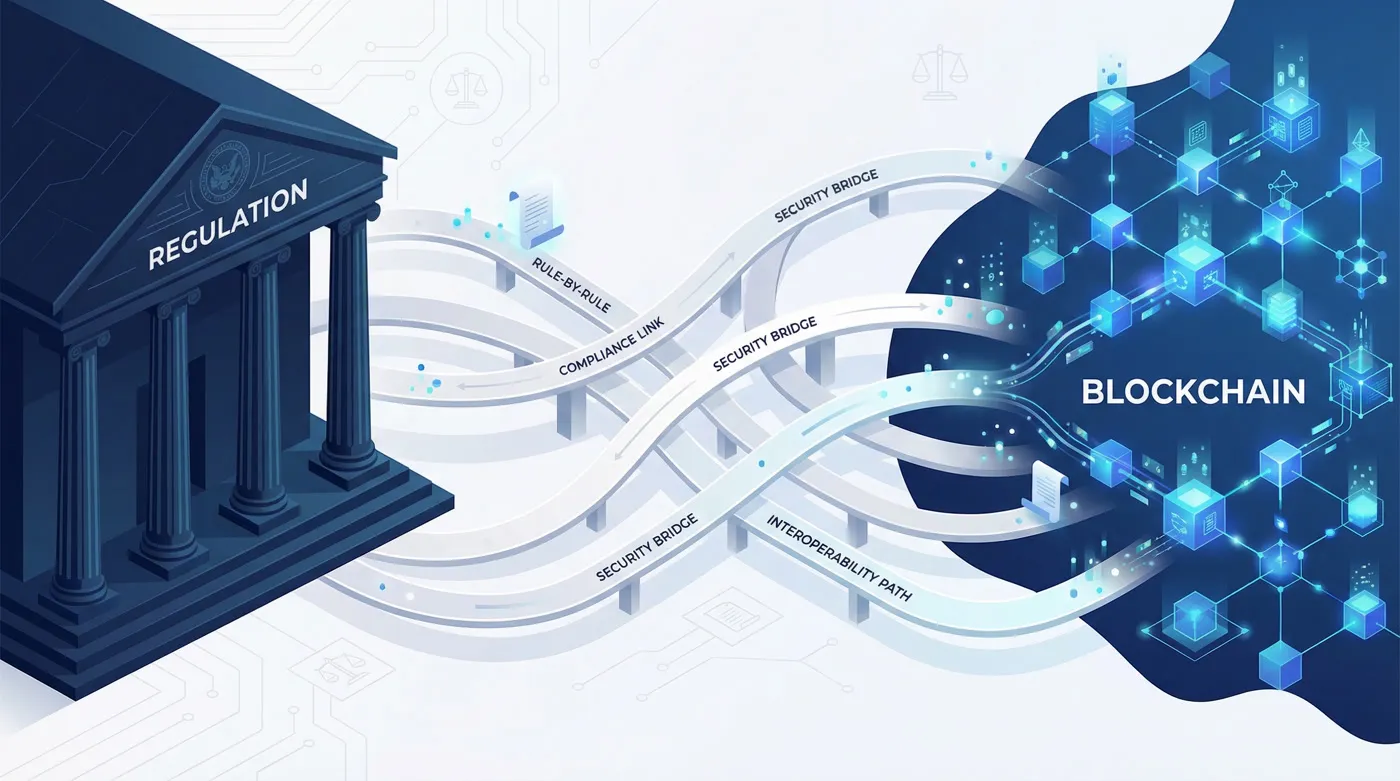
On March 12, 2026, SEC Commissioner Hester Peirce revealed that the agency is working on a “narrower” innovation exemption for tokenized securities. The approach follows a recommendation from the SEC’s Investment Advisory Committee to grant exemptions on a “rule-by-rule” basis rather than through blanket waivers.
This marks a real shift. The SEC is trying to fit blockchain-based securities trading into regulations written for a world of paper certificates and T+1 settlement without breaking either the technology or the investor protections those rules were meant to provide. It’s a harder problem than it looks.
What are tokenized securities?
Start with the basics. Tokenized securities are traditional financial assets (stocks, bonds, real estate interests) represented as digital tokens on a blockchain. The format changes, but the legal classification doesn’t. A stock is still a stock. That means full compliance with Securities Act registration requirements and Exchange Act provisions.
There are two categories, according to the SEC’s January 2026 staff statement:
Issuer-sponsored tokens are created by or with authorization from the underlying company. Third-party tokens are created without issuer involvement and face extra scrutiny. The distinction matters because third-party tokenization raises questions about consent, market confusion, and who’s responsible when things go wrong.
Why current rules don’t fit
The existing securities framework was designed for intermediaries, physical certificates, and time delays between trade execution and settlement. Blockchain breaks those assumptions.
Settlement rules assume a gap between trade and settlement. T+1 means your trade on Tuesday settles on Wednesday. Blockchain enables atomic settlement: the security and payment change hands simultaneously in a single transaction. No lag, no counterparty risk.
Intermediary definitions don’t account for automated market makers or decentralized exchanges. These systems don’t fit neatly into “broker,” “dealer,” or “exchange.” They’re code, not companies. Peirce asked directly: if there are no intermediaries, who does the SEC regulate?
Record-keeping rules assume centralized transfer agents maintain master securityholder files. On blockchain, the ledger itself is the master file. It’s public, real-time, and doesn’t require a trusted intermediary to maintain.
Trading hours are fixed in traditional markets. Blockchain-based trading runs 24/7. Custody rules weren’t written with distributed ledger technology in mind. None of this makes tokenized securities illegal, but it creates friction where the technology and the regulations meet.
What “rule-by-rule” actually means
The IAC’s recommendation is specific: don’t give tokenized securities a blanket exemption from all regulations. Instead, analyze which rules create genuine conflicts with blockchain technology and grant targeted relief only where needed.
The committee was clear in its February 26, 2026 recommendation document: “The most significant risk associated with the tokenization of equity securities is that these reforms or grants of exemptive relief could introduce new risks that investors do not understand and impose higher costs that outweigh the benefits of tokenization.”
Their approach preserves mandatory disclosure requirements, investor protection safeguards, best execution obligations, and routine outside supervision. The goal is to enable the technology without creating regulatory arbitrage between traditional and tokenized securities.
This matters because a blanket exemption would let issuers tokenize assets to dodge rules that apply to everyone else. That’s not innovation, it’s a loophole. Rule-by-rule relief means the SEC has to justify each exemption and explain why blockchain genuinely requires different treatment.
Peirce’s six questions
Commissioner Peirce laid out six questions in her March 12 remarks that frame what the SEC still needs to figure out:
1. Are existing disclosures insufficient? If current issuer disclosure requirements work for traditional securities, why wouldn’t they work for tokenized versions?
2. Should tokenization itself trigger new disclosure? Do broker-dealers and clearing agencies that tokenize securities need to disclose information specific to the tokenization process?
3. Does atomic settlement need T+1 relief? Peirce asked the committee to clarify why relief from T+1 rules is necessary for transactions that settle faster than required. If you’re beating the standard, why do you need an exemption?
4. What if there are no intermediaries? She called this “one of the beauties of this technology.” But if intermediaries don’t fit existing definitions, does the SEC even have authority to regulate them?
5. Should different tokenization models be allowed? Should the SEC permit various approaches to help assess their risks, benefits, and appropriate regulatory treatment?
6. What about issuer consent? Should third parties need permission from issuers to create tokenized versions of existing equity securities?
These aren’t rhetorical questions. They’re open issues that the exemption framework will have to resolve.
What the exemption might enable
SEC Chair Paul Atkins and Commissioner Peirce outlined the innovation exemption structure in their joint remarks at ETHDenver on February 18, 2026:
The framework would be temporary but substantial, giving the SEC time to develop permanent rules. Trading volume would be capped (limits to be determined). All buyers and sellers would go through white-listing and identity verification. Issuers would work with transfer agents or tokenization agents to tokenize securities. Specific rules incompatible with blockchain would get exemptions.
The system would allow automated market makers, decentralized trading systems, and what Atkins called “novel platforms with an eye toward developing a long-term regulatory framework.”
Atkins highlighted something interesting about compliance embedding: “A company’s founders, for example, could code their commitment not to resell their securities for a certain period of time into the smart contract governing tokenized securities.” Lock-up periods become programmatically enforceable, not just contractual promises.
Technical requirements for compliance
Building a compliant tokenized securities system means solving several problems simultaneously:
Atomic settlement bundles the security transfer, payment transfer, and ownership record update into a single blockchain transaction. This eliminates settlement risk but requires both the asset and payment to be on-chain.
Identity and compliance layers handle KYC/AML requirements, investor eligibility verification, jurisdictional transfer restrictions, and sanctions screening. This can be implemented at the protocol level (like the Nomyx platform) or through smart contract white-listing.
Transfer restrictions get encoded into smart contracts: lock-up periods for insiders, geographic restrictions, holding period requirements, and compliance with exemptions like Rule 144 and Reg S.
Record-keeping shifts from centralized databases to public blockchain as the authoritative source. Issuers and regulators get real-time transparency without requesting reports from transfer agents.
Privacy-preserving technology uses zero-knowledge proofs to prove compliance without full disclosure. You can demonstrate accredited investor status without revealing your wealth, or satisfy KYC requirements without exposing your identity on-chain. Atkins noted this could mean “Americans would not have to relinquish their privacy wholesale to financial institutions, and these intermediaries would have lower compliance costs.”
Several platforms already operate in this space. tZero is a registered broker-dealer and alternative trading system with an integrated regulatory stack. Securitize is a registered transfer agent with over 200 tokens deployed. The DTCC is piloting a tokenization service for launch in the second half of 2026.
The trade-offs
The rule-by-rule approach is conservative. That’s the point. It avoids creating a separate, lighter regulatory regime for tokenized securities that would incentivize issuers to tokenize just to escape oversight.
But conservative means slow. The temporary exemption will have volume caps and white-listing requirements. This isn’t Uniswap for stocks. It’s a sandbox with guardrails.
The issuer consent question is the biggest unresolved tension. If third parties can’t tokenize securities without issuer permission, it limits the “permissionless innovation” ethos that drives much of blockchain development. But if they can, you get derivative products that could confuse markets and create weird incentive problems.
Peirce’s question about T+1 relief shows the SEC is thinking carefully about what actually needs exempting. Settling faster than required shouldn’t need an exemption. That question suggests the final framework will be narrower than the industry might hope.
What this means
The SEC is building infrastructure for blockchain-based securities that preserves investor protections while enabling new technology. They’re doing it incrementally, which frustrates people who want fast results but makes sense given the stakes.
Commissioner Peirce put it plainly: “We are working incrementally now, as we have always done. The goal is to facilitate the organic incorporation of new technology in a way that enhances the dynamism and resilience of the system.”
The innovation exemption will likely arrive in late 2026 or early 2027. It will be temporary, capped, and narrowly tailored. Permanent rules will take longer. This is securities regulation, not software deployment. The pace is deliberate because getting it wrong means either stifling innovation or creating systemic risk.
For now, the rule-by-rule approach signals the SEC is taking tokenized securities seriously without assuming blockchain automatically deserves special treatment. That’s probably the right balance.
Sources: SEC Commissioner Hester Peirce remarks at IAC meeting, March 12, 2026, SEC Chair Paul Atkins remarks at IAC meeting, March 12, 2026, Atkins & Peirce joint remarks at ETHDenver, February 18, 2026, SEC Investment Advisory Committee Recommendation on Tokenization of Equity Securities, February 26, 2026, SEC Staff Statement on Tokenized Securities, January 28, 2026. Data and status as of March 13, 2026.