The $193 million gamble: Why crypto's biggest legislative push is stuck on one issue
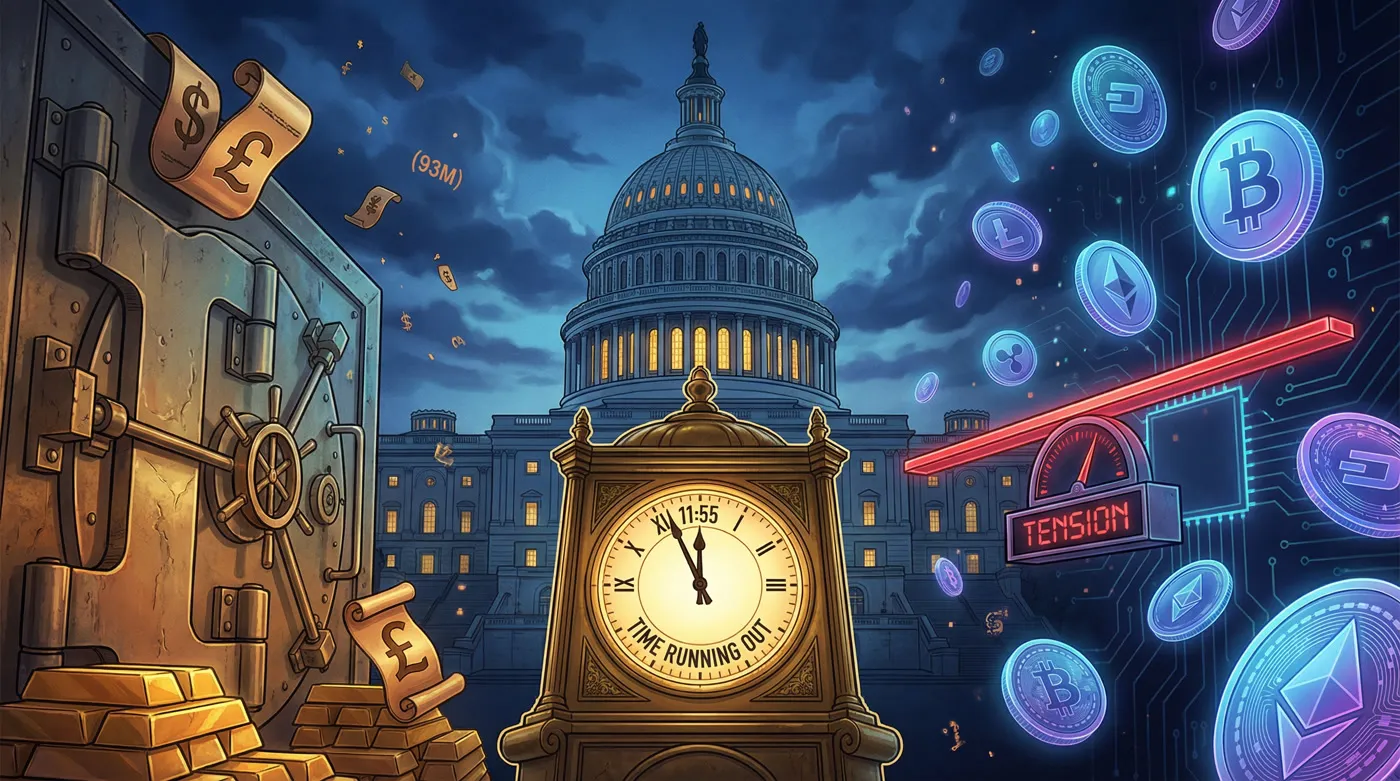
Crypto has spent a staggering $193 million through the Fairshake PAC to push the most important piece of U.S. crypto legislation ever written. The Digital Asset Market Clarity Act (H.R. 3633) sailed through the House last July with overwhelming bipartisan support, 294-134. It would finally divide jurisdiction between the SEC and CFTC, ending years of regulatory chaos.
And now it’s stuck. On one issue. Whether platforms like Coinbase can offer 3.5% rewards on stablecoin holdings.
That’s it. That’s what $193 million in lobbying and two years of legislative work have come down to. As the Senate calendar ticks toward the July midterm recess, crypto faces a brutal choice: sacrifice stablecoin rewards or lose the whole bill.
What’s in the CLARITY Act (and why it matters so much)
The CLARITY Act is the framework crypto has been begging for since 2017. It would establish clear rules for when a digital asset is a security (SEC jurisdiction) or a commodity (CFTC jurisdiction). It would create a new “mature blockchain test” for decentralization. It would give exchanges legal certainty about which regulator governs which asset.
The House version passed with 14 Republican and 7 Democratic cosponsors. Strong bipartisan momentum. Six titles dividing up the regulatory map. Everything crypto needed to operate in the United States without playing jurisdictional whack-a-mole.
Then it hit the Senate. And everything stopped.
On January 12, 2026, the Senate Banking Committee released a 278-page draft bill. Buried in it: a provision prohibiting digital asset platforms from offering interest or yield on stablecoin balances.
The industry exploded. Coinbase CEO Brian Armstrong withdrew support on January 14. The Banking Committee markup, scheduled for that same day, was postponed. Then postponed again on February 28. As of March 3, no new markup date has been set.
The White House set an informal March 1 deadline for compromise. It came and went. No deal.
The standoff: Banks vs. crypto platforms
The banking industry’s position is straightforward. If crypto platforms pay 3.5% on USDC holdings while commercial banks pay 0-1% on checking accounts, deposits will flee to crypto. That starves banks of the capital they need for lending. Stablecoin yield, they argue, is just deposit interest by another name. A loophole that threatens Main Street lending.
And they have firepower. Commercial banks spent $56.7 million on federal lobbying in 2025. JPMorgan, Bank of America, and Wells Fargo are all pushing hard against stablecoin yield provisions. The CLARITY Act has appeared on dozens of bank lobbying disclosures opposing any carve-out for platform rewards.
Crypto’s argument is different. Stablecoin rewards aren’t deposits. They’re transaction incentives for using crypto infrastructure. Coinbase points to its ~3.5% USDC rewards as fundamentally different from bank interest because they’re tied to network participation, not passive holding. And crypto has its own lobbying muscle: Coinbase alone spent over $2 million directly lobbying for CLARITY, plus $25 million to the Fairshake PAC. Ripple kicked in another $25 million. Andreessen Horowitz added $24 million.
Twelve of the bill’s 22 sponsors are backed by the Fairshake network. Crypto has never had this much political capital before.
But here’s the problem. The industry isn’t united.
Brian Armstrong withdrew Coinbase’s support in January, calling the stablecoin yield ban a dealbreaker. Chris Dixon from a16z publicly disagreed, urging the industry to push the bill forward despite its flaws. Ripple’s Brad Garlinghouse sided with Dixon, predicting 80% odds the bill still passes and arguing that imperfect legislation beats continued uncertainty.
That split weakened crypto’s negotiating position. If the industry can’t agree on what’s acceptable, why should senators feel pressure to compromise?
The White House tried to mediate (and failed)
In February, the White House hosted two meetings trying to broker a compromise. Treasury Secretary Scott Bessent and crypto council executive director Patrick Witt brought both sides to the table on February 10 and again on February 19.
The White House proposal: ban yield for merely holding stablecoins (like a bank account), but allow rewards for actual transactions and infrastructure support. Activity-based rewards, not idle interest.
Crypto insiders left feeling confident. They had the GENIUS Act behind them (a separate stablecoin law that passed in July 2025), and the White House seemed to favor their position. Trump himself has publicly urged Congress to pass the bill, calling for the U.S. to become the “crypto capital of the world.”
But the banks didn’t budge. And they made a simple point: the White House doesn’t vote in the Senate.
You need 60 votes to overcome a filibuster. Republicans hold 53 seats. That means crypto needs at least seven Democrats to cross over. Democratic senators like Elizabeth Warren and Sheryl Brown have made clear they want tougher anti-money laundering rules, stronger ethics provisions (targeting Trump family crypto interests), and limits on DeFi. None of that has been resolved either.
The March 1 deadline passed with no deal. The standoff continues.
Then the OCC dropped a bombshell
On February 25, 2026, the Office of the Comptroller of the Currency published a proposed rule implementing the GENIUS Act. And it threw everything into chaos.
The GENIUS Act was supposed to be crypto’s ace in the hole. Passed into law in July 2025, it established a federal stablecoin framework with bank-level prudential rules for issuers. The industry believed it preserved platform rewards, since GENIUS regulates issuers (like Circle) but not affiliates offering rewards on those stablecoins (like Coinbase).
The OCC’s proposed rule suggested otherwise. The language was murky, but crypto lawyers flagged it immediately: “The OCC has clearly gone beyond what the statute requires. The extent of the restriction is open to debate.”
In other words, GENIUS might not protect stablecoin rewards the way crypto thought it did.
Suddenly the banks had regulatory backing for their position. The compromise the White House was pushing (activity-based rewards) looked a lot weaker if the OCC was signaling that even GENIUS might restrict those programs.
Crypto is now fighting on two fronts: legislative (the CLARITY Act in the Senate) and regulatory (the OCC’s 60-day public comment period on GENIUS implementation). The banking lobby’s hand just got a lot stronger.
The calendar is crypto’s real enemy
Here’s the thing nobody’s talking about enough: time is running out.
2026 is a midterm election year. Senate lawmakers will barely be working after the end of July as they head back to their districts for campaigning. That gives the Banking Committee maybe four months to advance the bill through markup, floor debate, and reconciliation with the House version.
And it’s already March 3. The first markup was postponed on January 14. The second postponement happened February 28. No new date is set.
Each week that passes reduces the available floor time. Even if the Banking Committee resolves the stablecoin issue tomorrow, there are still other unresolved questions:
- Ethics provisions: Democrats want stronger rules preventing officials from profiting off crypto (aimed at Trump’s family crypto ventures). Republicans say existing Office of Government Ethics rules are sufficient.
- DeFi oversight: The Senate draft extends Bank Secrecy Act and anti-money laundering requirements to some DeFi protocols. Privacy advocates and Coinbase object. The Agriculture Committee punted on DeFi entirely.
- Tokenized equities: The draft restricts blockchain-based shares. Industry warns this stifles digital securities innovation.
- CFTC governance: Democrats want a fully staffed, bipartisan CFTC before expanding its authority over crypto. An amendment requiring that failed 12-11 in committee.
None of these are impassable roadblocks. But months of negotiations haven’t cleared them yet. And the clock is ticking.
The binary choice
Crypto is facing the most expensive political gamble in its history. $193 million deployed. The most important U.S. legislation ever written for digital assets. Bipartisan House support. Presidential backing.
And it might all collapse over whether Coinbase can pay 3.5% on USDC balances.
The industry has three options:
Option 1: Capitulate on stablecoin yield. Sacrifice platform rewards to secure the broader market structure legislation. This doesn’t guarantee passage (Democrats still want ethics provisions and DeFi fixes), but it removes the biggest obstacle.
Option 2: Hold firm and hope banks relent. Keep lobbying, push the White House compromise, and hope the OCC comment period goes crypto’s way. Risky, given the strengthened banking position post-OCC proposal.
Option 3: Let the bill die. If neither side budges and the Senate calendar runs out after July, the bill dies in 2026. Regulatory uncertainty continues. The SEC and CFTC keep writing rules without statutory foundation. U.S. crypto policy remains in limbo.
Prediction markets are pricing in about 61-62% odds the bill passes by the end of 2026. That’s down from ~80% in early January, before Coinbase withdrew support. But it’s up from the ~50% low after the first Banking Committee postponement.
The market is uncertain. So is the industry. So is the Senate.
What happens if CLARITY doesn’t pass
If the bill fails, crypto doesn’t fall off a cliff. But it stays stuck in the mud.
The SEC and CFTC will continue writing rules without the statutory foundation CLARITY would provide. Those rules are easier to peel back under future administrations. “Regulation by enforcement” continues. Jurisdictional ambiguity (is it a security or a commodity?) remains unresolved.
Stablecoin issuers would still operate under the GENIUS Act. But DeFi would stay in a regulatory gray zone. U.S. exchanges would still face uncertainty about which assets they can list. The U.S. would fall further behind jurisdictions like the EU, which already has the Markets in Crypto-Assets (MiCA) framework in place.
And politically, it would be a massive defeat for crypto. $193 million spent. Twelve of 22 bill sponsors backed by Fairshake. Presidential support. Overwhelming House passage. And it couldn’t get across the finish line in the Senate because the industry couldn’t agree on stablecoin rewards.
That’s a hard loss to explain to the next Congress.
The clock is ticking
As of today, March 3, 2026, the CLARITY Act remains stalled. No markup date. No compromise. No resolution.
Crypto spent a record amount of money to get here. The banking lobby is dug in. The OCC muddied the regulatory waters. The Senate calendar is shrinking. And the industry is divided on whether to sacrifice stablecoin yield or risk losing the whole bill.
This is what $193 million buys you in Washington: a very expensive standoff over 3.5%.
Last updated: March 3, 2026 10:15 PM CET
Sources
- H.R. 3633 Digital Asset Market Clarity Act (Congress.gov)
- Senate Banking Committee 278-page draft bill (January 12, 2026)
- OCC GENIUS Act proposed rule (February 25, 2026, OCC Bulletin 2026-3)
- CoinDesk: Crypto world faces growing pressure to relent on stablecoin rewards (March 2, 2026)
- Latham & Watkins U.S. Crypto Policy Tracker
- OpenSecrets: Commercial bank lobbying data (2025)
- Washington Examiner: Crypto lobbying analysis (January 17, 2026)
- Polymarket: CLARITY Act prediction market
- Baker McKenzie: What CLARITY Act delay reveals about crypto regulation