The Sovereign Bitcoin Reserve Race: Beyond El Salvador
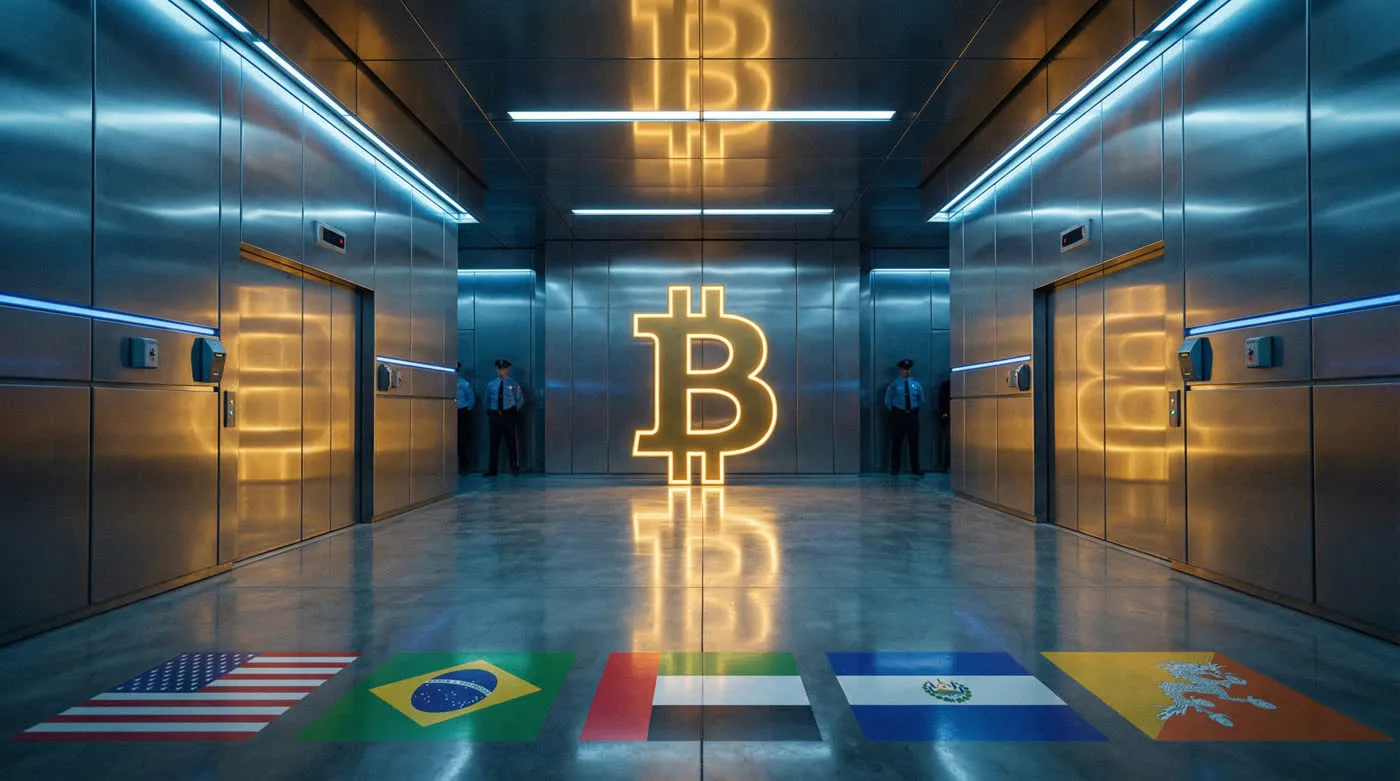
When El Salvador made Bitcoin legal tender in September 2021, the world treated it as an outlier. A bold experiment. Maybe reckless. Definitely weird.
Fast forward to March 2026, and 27 countries hold Bitcoin on sovereign balance sheets. That’s roughly one in seven nations worldwide. More than 460,000 BTC (2.3% of total supply) sits in government treasuries, valued north of $30 billion at current prices.
This isn’t a speculative bet anymore. It’s infrastructure. Nation-states are retaining seized Bitcoin instead of auctioning it off. They’re passing laws to actively purchase it. Some are mining it with excess renewable energy. A few are treating it like digital gold, a hedge against dollar debasement and geopolitical risk.
Something structural shifted between 2021 and 2026. Let’s figure out what.
From seizure to strategy
For years, governments accumulated Bitcoin the boring way: they confiscated it from criminals and sold it at auction. The U.S. government, for instance, seized nearly 200,000 BTC from the Silk Road darknet market. Most of it got auctioned off between 2014 and 2020. A few venture capitalists got very rich.
That changed in March 2025.
President Trump signed an executive order establishing a Strategic Bitcoin Reserve: the first formal distinction between Bitcoin (strategic reserve asset) and other cryptocurrencies (held separately in a Digital Asset Stockpile). The U.S. stopped selling seized Bitcoin. Instead, it started holding.
Current U.S. holdings: ~328,372 BTC. The largest sovereign Bitcoin position in the world.
The policy shift is subtle but significant. The U.S. government no longer treats Bitcoin as contraband to be liquidated. It’s an asset worth keeping. The executive order describes a decentralized custody network across multiple secure facilities, a “Digital Fort Knox” for the 21st century.
Congress went further. Senator Cynthia Lummis introduced the BITCOIN Act (S.954), proposing the purchase of up to 1 million BTC as a strategic reserve. The bill would establish formal custody infrastructure and allow states to voluntarily store their holdings in the federal reserve system.
It’s still in committee. But the signal is clear: Bitcoin is no longer fringe. It’s statecraft.
States moved faster than Washington
While Congress debated, state legislatures acted.
Texas led the charge. Governor Greg Abbott signed SB 21 and HB 4488 in June 2025, creating the Texas Strategic Bitcoin Reserve with legal protections against future legislative rollback. The law took effect immediately.
Oklahoma followed with HB 1203, passed 77-15 in the state House. Effective November 1, 2025.
New Hampshire and Arizona enacted similar legislation the same year.
By the time the federal government finalized its regulatory framework (the GENIUS Act in July 2025), four states had already established their own Bitcoin reserves. Several dozen more are considering bills in 2026.
This is American federalism doing what it does best: letting states experiment while the federal government catches up. Texas didn’t wait for permission. It treated Bitcoin like any other commodity a state treasury might hold. Oil. Cattle. Digital scarcity.
The fascinating part? These aren’t blue states or tech hubs. They’re conservative-leaning states with fiscal discipline cultures. Bitcoin isn’t a Silicon Valley fantasy anymore. It’s a treasury management tool.
The international picture
The U.S. isn’t alone.
China holds an estimated 190,000 BTC (worth ~$12.6 billion), mostly from seizures tied to illegal mining operations after the 2021 crackdown. China banned retail crypto trading, but it kept the Bitcoin it confiscated. No public policy to sell. Just… hold.
The United Kingdom sits on 61,245 BTC (~$4.1 billion) from criminal seizures. Same story: retained, not sold.
Ukraine has 46,351 BTC (~$3.1 billion), a mix of seizures and donations during the Russia-Ukraine conflict. Some of it funded wartime expenses. Some remains on the balance sheet.
Then there’s Bhutan, which took a completely different approach.
Bhutan didn’t buy Bitcoin. It mined it. The Himalayan kingdom uses excess hydropower from glacial melt to run Bitcoin mining operations. When spring runoff floods the grid with more electricity than the country can use, state-owned Druk Holdings converts that surplus into BTC.
In December 2025, Bhutan pledged up to 10,000 BTC to back development of the Gelephu Mindfulness City. By 2026, it expanded mining capacity to 600 megawatts. Bitcoin becomes a battery: a way to store value from seasonal energy abundance.
The United Arab Emirates took yet another route: indirect exposure via sovereign wealth funds. Abu Dhabi’s Mubadala Investment Company and Al Warda Investments hold over $1.1 billion in Bitcoin through BlackRock’s spot Bitcoin ETF (IBIT). They’re not buying BTC directly, but they’re gaining exposure through regulated financial products.
These are wildly different strategies. But they share a common thread: governments treating Bitcoin as something worth owning.
El Salvador: still the pioneer
El Salvador remains the only country to make Bitcoin legal tender, though it scaled that back in 2025. The IMF made voluntary acceptance a condition for $1.4 billion in support. Bitcoin is still an option, just not mandatory.
As of February 17, 2026, El Salvador holds ~7,565 BTC (worth ~$520 million). President Nayib Bukele continues daily 1 BTC purchases, a “buying the dip” strategy he’s maintained since 2021. In January 2026, he declared the country “all-in on Bitcoin and AI for 2026.”
The IMF initially opposed this. But by late 2025, the tone shifted. El Salvador’s economy grew ~4% in 2025, praised by the IMF itself. The country diversified reserves, adding $50 million in gold alongside its Bitcoin stack. Dual hedges against dollar debasement.
El Salvador’s experiment is no longer an outlier. It’s a case study. And increasingly, other countries are reading the notes.
Brazil wants 1 million BTC
On February 13, 2026, Brazilian lawmakers reintroduced Bill 4501/2024, proposing a Strategic Sovereign Bitcoin Reserve (RESBit). The target: acquire up to 1 million BTC over five years, making Bitcoin 5% of national reserves.
If enacted, this would be the largest sovereign Bitcoin accumulation program by purchase volume, matching the U.S. BITCOIN Act’s target but with Brazil’s economy behind it.
Testimony came from Pedro Henrique Guerra, the Vice President’s Chief of Staff, advocating for Bitcoin-backed Treasury bonds. The idea: use Bitcoin as partial collateral for government debt, potentially lowering borrowing costs by attracting crypto-native institutional investors.
The bill is in Economic Development Committee review. But the fact that it exists, and has high-level political backing, signals how far the conversation has moved since 2021.
Why now?
Three things made this possible.
First: institutional infrastructure matured.
The approval of spot Bitcoin ETFs in January 2024 gave institutions a regulated, familiar vehicle for exposure. Custody solutions from Coinbase, Fidelity, and BitGo now meet sovereign-grade security standards. In 2026, Citi announced plans to launch a Bitcoin custody solution integrated with existing institutional workflows: tax, compliance, reporting.
The U.S. GENIUS Act (July 2025) codified legal rules for banks and qualified custodians to handle digital assets, ending years of “regulation by enforcement.” The Federal Reserve rescinded SAB 121, which had forced banks to hold customer crypto on balance sheets. Regulatory clarity reduced the risk of holding Bitcoin at scale.
Second: macro concerns about dollar debasement.
U.S. national debt exceeds $36 trillion as of 2026. Federal deficits persist despite economic growth. Countries looking for reserve assets that aren’t tied to U.S. fiscal policy see Bitcoin as a neutral alternative. It’s portable (transferable globally in ~10 minutes without intermediaries). It’s scarce (capped at 21 million coins). And it’s not controlled by any single government.
Bitcoin positioned itself as “digital gold” precisely when faith in traditional fiat reserves started showing cracks.
Third: game theory.
When one country starts stacking, others pay attention. If the U.S. or Brazil executes a 1 million BTC purchase, that’s nearly 5% of total supply. Combined with existing sovereign holdings (~2.3%), governments could control over 7% of circulating supply.
Reduced liquid supply drives price appreciation. Price appreciation creates FOMO (fear of missing out) among other nation-states. First-movers get lower average cost. Latecomers pay a premium.
It’s the same dynamic that drove central banks to accumulate gold in the 20th century. Except this time, the reserve asset has a hard cap.
What it means
Sovereign Bitcoin adoption changes the game in a few ways.
Legitimacy. When 27 countries hold Bitcoin, it’s no longer a “magic internet money” meme. It’s a recognized asset class alongside gold, oil, and foreign currency reserves.
Supply shock. Governments tend to hold for the long term. If even 10% of Bitcoin supply moves into sovereign treasuries and stays there, that’s a permanent reduction in liquid supply. Price dynamics shift.
Geopolitical neutrality. Bitcoin offers an alternative to dollar-denominated reserves without requiring trust in another nation’s central bank. For countries concerned about sanctions, SWIFT exclusions, or dollar weaponization, that’s valuable.
Infrastructure acceleration. As governments demand custody, compliance, and settlement infrastructure, the private sector builds it. That same infrastructure serves institutions, corporations, and eventually retail. Sovereign adoption pulls the entire ecosystem forward.
What to watch
The BITCOIN Act (S.954) is still in committee. If it passes, the U.S. government would start actively purchasing Bitcoin, not just holding seized coins. That’s a policy shift with global ripple effects.
Brazil’s Bill 4501/2024 is under review. A 1 million BTC purchase would make Brazil the second-largest sovereign holder after the U.S. (if both execute their plans). The geopolitical implications are significant: the Global South challenging U.S. dominance in reserve accumulation.
Meanwhile, state legislatures across the U.S. continue filing Bitcoin reserve bills. Michigan, Massachusetts, and others have proposals active in 2026. The question isn’t whether more states will pass them. It’s how many.
And internationally, watch for movement in the EU. MiCA (Markets in Crypto-Assets regulation) is rolling out across member states in 2026. If any EU country proposes a strategic reserve, it would shift the bloc’s stance overnight.
Sources
- White House: Establishment of the Strategic Bitcoin Reserve and United States Digital Asset Stockpile (March 6, 2025)
- U.S. Congress: S.954 - BITCOIN Act of 2025
- Hunton Andrews Kurth: Texas Establishes Strategic Bitcoin Reserve
- Bitcoin Policy Institute: Nation State Adoption: How and Why Countries Are Gaining Exposure to Bitcoin
- Chainalysis: Bitcoin Strategic Reserves (May 29, 2025)
- Bitcoin Treasuries: El Salvador Bitcoin Holdings
- Bitcoin Treasuries: Bhutan Bitcoin Holdings
- CoinDesk: IMF Praises El Salvador’s 4% GDP Growth as Bitcoin Tensions Ease (Dec 23, 2025)
- CoinDesk: Bhutan Commits Up to 10,000 Bitcoin to Back New Mindfulness-Based Economic Hub (Dec 17, 2025)
- Forbes: Nation-States Turn to Bitcoin as a Strategic Reserve Asset (Jan 3, 2025)
- CCN: National Crypto Reserves Tracker: Which Countries Actually Turned Bitcoin Into State Wealth (Dec 26, 2025)
- FinanceFeeds: Abu Dhabi Sovereign Wealth Funds Report Massive Expansion of Bitcoin Holdings (Feb 17, 2026)
- Bitcoin Magazine: Brazil Eyes 1 Million Bitcoin For National BTC Reserve (Feb 13, 2026)
- Visual Capitalist: Which Governments Hold the Most Bitcoin in 2025? (Aug 27, 2025)
- Datos Insights: Bitcoin Institutional Adoption: How U.S. Regulatory Clarity Unlocks US$3 Trillion in Financial Services Capital (July 28, 2025)