Blockstream Jade Becomes First Hardware Wallet with Native Lightning Support
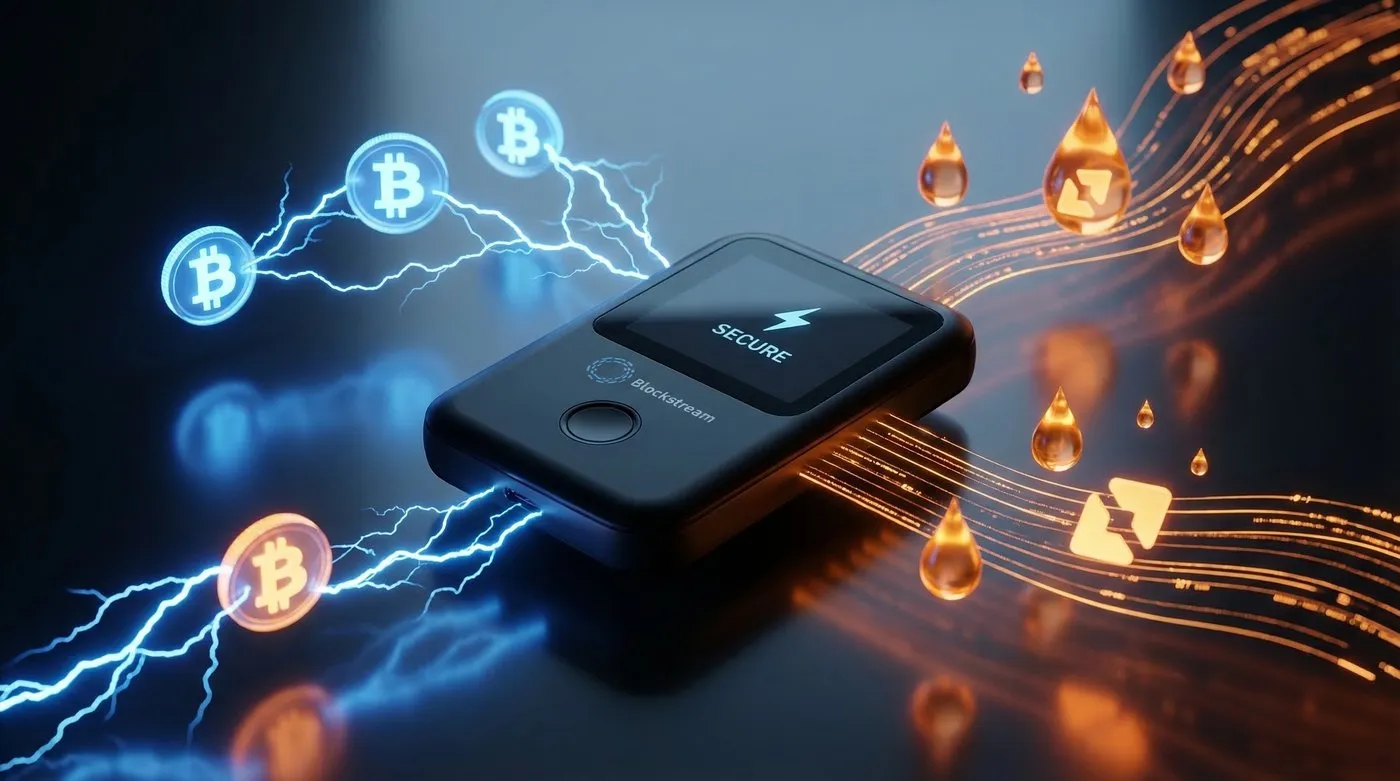
On March 10, 2026, Blockstream announced Lightning Network support for its Jade hardware wallet. This marks the first time a hardware wallet has been able to interact with Lightning payments without exposing private keys to a hot wallet.
But here’s the interesting part: Jade isn’t actually running Lightning channels in cold storage. That would be technically impossible. Instead, it uses a clever architectural trick involving atomic swaps and the Liquid sidechain to bridge Lightning’s speed with hardware wallet security.
The Lightning cold storage paradox
Lightning and hardware wallets have never worked together for a simple reason: they have fundamentally opposite requirements.
Lightning requires:
- An always-online node to monitor channel state
- Instant signing of channel updates (hundreds per channel)
- Hot keys in RAM to respond to payment requests in real-time
Hardware wallets provide:
- Offline key storage
- Manual, infrequent signing with user approval
- Cold keys that never leave the device
You can’t have both. Until now, the standard approach has been to keep on-chain Bitcoin in cold storage and send small amounts to a separate hot Lightning wallet when you need to make fast payments. That works, but it means your Lightning funds are always at risk.
How Jade sidesteps the problem
Jade doesn’t solve the paradox. It bypasses it with a three-layer architecture that connects Lightning, Liquid, and Bitcoin mainchain.
Here’s what happens when you receive a Lightning payment:
- You generate a Lightning invoice in the Blockstream app
- The sender pays your invoice
- Boltz (an atomic swap provider) receives the Lightning payment
- Boltz instantly converts it to Liquid Bitcoin (LBTC) via an atomic swap
- LBTC lands in your Liquid wallet, secured by Jade’s private keys
- Jade doesn’t need to be connected during any of this
Sending works in reverse: paste a Lightning invoice, Jade signs a Liquid transaction, Boltz swaps your LBTC for Lightning sats, and pays the invoice.
The key insight: Liquid blocks confirm in about one minute (vs. Bitcoin’s ten), and Liquid transactions don’t require 24/7 monitoring like Lightning channels do. So Jade can secure Liquid funds in cold storage while atomic swaps handle the conversion to and from Lightning.
What are atomic swaps?
Atomic swaps are trustless exchanges where either both sides complete or both sides fail. There’s no middle state where one party gets paid and the other doesn’t.
In this case, Boltz provides submarine swaps between Lightning and Liquid using Hash Time-Locked Contracts (HTLCs). If the Lightning payment succeeds, your LBTC is released. If it fails, the swap refunds. Boltz never has custody in the traditional sense because funds are locked in smart contracts.
This means you’re not trusting Boltz to hold your money, but you are depending on them to be online and operational for the swaps to work.
The Liquid trade-off
Here’s what Blockstream doesn’t emphasize in their announcement: you’re trusting the Liquid Network’s federated peg.
Liquid is a Bitcoin sidechain secured by a federation of 67 member organizations (exchanges, traders, financial institutions). Of those, 15 operate the hardware that controls the peg, and 11-of-15 signatures are required to move pegged Bitcoin.
That federation includes companies like Bitfinex, Kraken, Boltz, and others. The full list isn’t publicly disclosed for security reasons.
What this means for your trust model:
- You’re trusting that at least 11 of the 15 functionaries are honest
- You’re trusting the federation won’t collude to censor transactions or freeze the peg
- You’re trusting Blockstream (as Liquid’s developer) won’t introduce backdoors
That’s a different security model than pure Bitcoin. It’s stronger than trusting a single custodial Lightning wallet, but it’s not trustless. It’s trust-minimized.
For comparison:
- Custodial Lightning wallet: Trust one company with full custody
- Self-hosted Lightning node: Trustless, but requires always-on infrastructure
- Jade + Liquid + Lightning: Trust 11-of-15 federation members
- On-chain only: Trustless, but high fees and slow for small payments
Who should use this?
Jade’s Lightning integration makes the most sense for three groups:
Merchants accepting Lightning payments
Accept Lightning all day without Jade connected. Payments auto-convert to LBTC in your cold storage wallet. At closing time, batch-swap everything to on-chain Bitcoin in a single transaction. No custodial payment processor required, and funds never sit in a hot wallet overnight.
DCA stackers withdrawing from exchanges
Weekly on-chain withdrawals create expensive transaction fees and UTXO bloat. With Jade, you can withdraw via Lightning to your Liquid address instantly and cheaply, then consolidate everything into a single on-chain Bitcoin UTXO once a month when fees are low.
Lightning users who want a cold storage backstop
Keep your daily spending in a regular Lightning wallet, but when the balance gets too high, send it to your Jade-secured Liquid address. Funds move from hot Lightning to cold Liquid storage without touching the Bitcoin mainchain.
Will other hardware wallets follow?
Probably not soon.
Blockstream has a unique advantage: they built Liquid, so integrating Jade with the Liquid network was straightforward. Ledger and Trezor would need to either partner with Blockstream or build similar swap infrastructure from scratch.
They’d also need to integrate Boltz (or another swap provider) into their apps and decide whether they’re comfortable endorsing Liquid’s federated trust model. Ledger and Trezor market themselves as fully self-custody solutions, and depending on Liquid’s federation introduces a trust layer they may not want to officially support.
In the short term, Jade will likely remain the only hardware wallet with this feature. If it proves popular, expect competitors to add Liquid support by 2027 or 2028. In the longer term, Lightning protocol upgrades like eltoo or channel factories may enable better cold-storage compatibility without needing a sidechain bridge.
The real milestone
Jade hasn’t solved the Lightning cold storage paradox. Lightning still requires hot keys, and hardware wallets still keep keys cold. Those facts haven’t changed.
What Jade has done is create a practical bridge between the two using Liquid as a buffer layer. You get Lightning speed without custodial risk, at the cost of trusting a federation instead of a single company.
That’s a genuine UX improvement for merchants, stackers, and Lightning users who want cold storage security. But it’s important to understand what you’re actually getting: not cold-storage Lightning channels, but atomic swaps to a federated sidechain secured by a hardware wallet.
That’s still a first. Just not quite the first the headline suggests.
Sources
- Blockstream Blog: All the Speed. All the Security. Jade Lightning Payments Are Here.
- Bitcoin Magazine: Blockstream’s Jade Hardware Wallet Adds Lightning Support For Instant Bitcoin Payments
- Bitcoin Optech: Submarine Swaps
- Blockstream Help Center: What is the Liquid Federation?
- Liquid Network Blog: Expanding Transparency
- Trezor Blog: Using the Lightning Network with your hardware wallet
Data as of March 19, 2026.